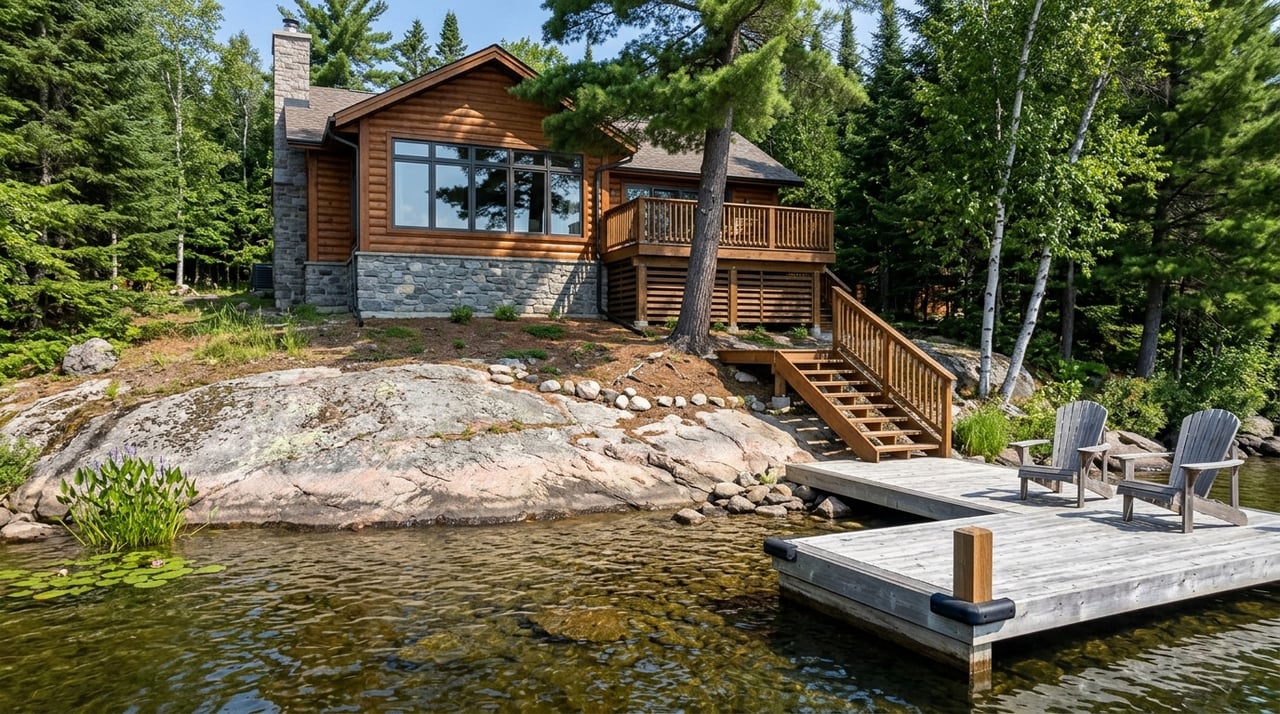
Wondering what it really means to buy on Go Home Lake? It is easy to fall for the privacy, the boating lifestyle, and the classic Muskoka shoreline, but the details of access, waterfront conditions, and seasonal use can shape your experience just as much as the view. If you are considering a cottage here, this guide will help you understand how Go Home Lake works in practice so you can buy with more clarity and confidence. Let’s dive in.
Go Home Lake Access Basics
Go Home Lake sits in the Township of Georgian Bay in the District of Muskoka, and access is one of the first things you need to understand. While there is a public road access point off Cowies Road, the lake community is still largely boat-oriented. The Go Home Lake Cottage Owners’ Association says there are roughly 450 cottages on the lake, and most are accessible only by boat.
That mix is part of what makes the area distinct. You will find road-access cottages, boat-access properties, and island holdings, sometimes within the same broader market search. Each type can support a great cottage lifestyle, but each comes with different day-to-day logistics.
Road-Access Cottages
Road-access properties can feel simpler at first glance, but they still need careful review. You will want to confirm how the road is maintained, whether there is practical parking, and whether the title truly connects to the road network. A long or narrow driveway can also affect how comfortably you can arrive, park, and turn around.
For many buyers, road access offers easier loading, unloading, and shoulder-season use. That said, it is still important not to assume every so-called road-access listing functions the same way. On a lake like Go Home, the details matter.
Boat-Access Properties
Boat-access cottages are a major part of the Go Home Lake lifestyle. Township-wide, Georgian Bay’s 2025 Fire Master Plan notes that about half of seasonal homes are water-access-only, which helps explain why marine access and storage are a normal part of ownership in this area.
If you are considering a water-access property, ask practical questions early. Where will you park? Which marina or launch will you use? Will you need a water taxi for guests or service providers? What is the plan for winter storage and mechanical support?
Go Home Lake Marina is a key access hub for the lake. It offers 250 slips along with parking, launching, water taxi service, winter storage, and mechanical support. For many buyers, that kind of infrastructure can make water-access ownership feel much more manageable.
Island Properties
Island properties often deliver the privacy and classic cottaging feel that draw buyers to southern Georgian Bay and Muskoka in the first place. They can also involve added zoning and shoreline considerations. The Township of Georgian Bay zoning by-law includes specific Shoreline Residential Island zones, which makes it especially important to confirm how the lot is classified.
If you are buying an island property, look closely at rules affecting docks, boathouses, septic systems, and shoreline structures. You do not want to rely on assumptions carried over from a mainland cottage. A property can be beautiful and still require careful compliance review.
Shoreline Conditions on Go Home Lake
Go Home Lake is not a one-note waterfront market. According to the MNR lake fact sheet, the lake covers 666 hectares, has a maximum depth of 32 metres, a mean depth of 8.6 metres, a perimeter of 105 kilometres, and island shoreline totaling 8.8 kilometres. Water clarity is listed at 3.6 metres, and shoreline development is classified as high.
Those numbers tell you the lake is large, varied, and well used. They also suggest that one shoreline can behave very differently from another. A sheltered bay, a rocky point, and a lot near wetland edge may all offer very different swimming, docking, and boating experiences.
Why Lot-Specific Review Matters
The surrounding Cognashene conservation reserve describes extensive wetland complexes, shoreline habitat, rock barren areas, open water, and places where lower water levels can shift shoreline vegetation and create floating mats. That does not mean every lot on Go Home Lake has the same conditions, but it does show how much shoreline variation exists around the lake.
For you as a buyer, that means broad lake averages are not enough. You will want to evaluate the specific lot’s shoreline exposure, near-shore depth, docking setup, and water approach. On this lake, the best buying decisions usually come from studying the actual frontage, not just the listing photos.
Water Levels and Shoreline Use
The MNR fact sheet also notes that water levels on Go Home Lake are regulated through an MNR-owned dam under the Muskoka River Water Management Plan. Regulated water levels are an important part of how the lake functions, especially when you are thinking about docking, boating access, and seasonal usability.
The Township of Georgian Bay Official Plan classifies Go Home Lake as a moderate sensitivity waterbody. That means shoreline controls are a meaningful part of the ownership picture. If you are planning improvements or simply want to understand what you are buying, local rules need to be part of your review.
Zoning Rules Buyers Should Know
On Go Home Lake, zoning is not just a technical detail. It can directly affect how much you can build, how your dock can be used, and what changes may or may not be possible over time.
The Township zoning by-law sets a 10% maximum lot coverage on Go Home Lake. It also includes dock rules based on projection from the current water mark and does not permit gazebos, hot tubs, pergolas, tents, or similar structures on docks.
These are the kinds of details that can shape value and enjoyment. If a property already has shoreline structures, you will want to understand whether they are legal, permitted, or non-conforming. If you hope to renovate or expand, you should know the limits before moving ahead.
Seasons Change the Ownership Experience
Go Home Lake is highly seasonal in the way it operates, even for owners who use their cottages beyond summer. The Go Home Lake Cottage Owners’ Association says water levels are managed after the spring thaw, usually in early April, through about mid-November to maintain boating-season levels. Outside that period, water levels drop significantly, and boats cannot be easily launched or navigated.
That seasonal shift matters more than many first-time buyers expect. A property that feels effortless in July may require a very different routine in late fall or early spring. Your ownership plan should match the lake’s calendar, not just your ideal weekend schedule.
Summer and Boating Season
During boating season, Go Home Lake offers the classic access and movement patterns buyers often picture. You can move between cottage, marina, beach areas, and neighboring parts of the lake with relative ease, subject to local conditions and routes.
Regatta Beach, for example, is identified by the Township as water-access only, with operating dates from May 11 to October 9. That is a useful reminder that many local lake amenities follow a seasonal schedule rather than operating year-round.
Fall, Winter, and Early Spring
Once managed boating-season levels end, logistics become more important. Lower water levels can affect launching, navigation, and access, especially for buyers who plan to use a property outside peak season. Winter storage and winterization are not side issues here. They are part of the ownership model.
This is one reason local marina support can be so valuable. Services like winter storage, haul-out planning, and mechanical support are closely tied to the real rhythm of owning on a water-access lake.
Boating Routes and Restricted Areas
If you plan to boat often, route planning should be part of your due diligence. Go Home Lake has vessel-operation restrictions in several narrow or sensitive areas, including Haunted Narrows, New Cut, Minors Bay, Echo Bay and Stumpy Bay, Heart Bay and Crystal Bay, and the Go Home River.
That does not make the lake harder to enjoy, but it does mean you should understand how your regular routes line up with these areas. If your cottage, marina slip, or favorite boating path takes you through restricted sections, it is better to know that before you buy.
A Practical Go Home Lake Checklist
Before removing conditions on a Go Home Lake purchase, it helps to slow down and confirm the basics. Small details can have a big impact on how easy and enjoyable the property is to own.
Here are some of the most important items to review:
- Confirm whether the property is road-access, water-access, or island-based
- Verify whether the title connects properly to the form of access being advertised
- Review parking, launch access, marina arrangements, and water taxi needs
- Confirm whether dock structures are legal, permitted, or non-conforming
- Check whether the septic system is existing, permitted, and properly documented
- Review zoning for lot coverage, dock rules, and island-specific designations where relevant
- Consider how lower off-season water levels may affect access and use
- Compare your intended boating routes with restricted areas on the lake
The Township zoning by-law defines a water access lot as one that cannot obtain access from a provincial highway, road, or private road. It also states that a sewage system permit is required for construction of any existing or new septic system. Those are not small technicalities. They are core pieces of the buying decision.
What Buyers Often Weigh Most
For many GTA and out-of-region buyers, Go Home Lake comes down to a lifestyle trade-off. You may gain privacy, natural shoreline, and a true boating-cottage experience, but you also take on more logistics than you would with a conventional road-access property.
That trade-off is not a drawback for everyone. In fact, for many buyers it is exactly the appeal. The key is making sure the property matches the way you actually want to use it in summer, shoulder seasons, and beyond.
A thoughtful purchase on Go Home Lake starts with the right questions. If you want help evaluating access, shoreline usability, zoning constraints, or the practical realities of seasonal ownership, Bryan Coxworth can help you navigate the details with clear, local guidance.
FAQs
What types of cottages are available on Go Home Lake?
- Go Home Lake includes road-access cottages, boat-access properties, and island lots, with most cottages described by the local cottage owners’ association as accessible only by boat.
What should buyers check for Go Home Lake boat-access properties?
- Buyers should confirm parking, launch or marina arrangements, water taxi needs, winter storage, and how the property is accessed during different seasons.
How do shoreline rules affect Go Home Lake properties?
- The Township of Georgian Bay applies shoreline-specific controls on Go Home Lake, including a 10% maximum lot coverage and dock rules that restrict certain structures on docks.
How do water levels change on Go Home Lake through the year?
- Water levels are generally managed from early April to about mid-November for boating season, and they drop significantly outside that period, which can limit launching and navigation.
What should buyers know about island properties on Go Home Lake?
- Buyers should confirm whether the lot falls within an island zone and review any rules affecting docks, boathouses, septic systems, and shoreline use before removing conditions.
Are there boating restrictions on Go Home Lake?
- Yes, vessel-operation restrictions apply in several areas, including Haunted Narrows, New Cut, Minors Bay, Echo Bay and Stumpy Bay, Heart Bay and Crystal Bay, and the Go Home River.