If you picture a four-season Muskoka cottage as simply a summer place with a furnace, you could be in for an expensive surprise. Winter in Muskoka is not mild, and a property that feels cozy in July can reveal major limits once freezing temperatures, heavy snowfall, and access challenges set in. If you are buying, upgrading, or preparing to sell, understanding what truly makes a cottage winter-ready can help you protect your comfort, your budget, and your long-term property value. Let’s dive in.
What Four-Season Really Means
In Muskoka, a true four-season cottage is more than a heated building. It is a property that can be occupied, serviced, and insured through winter with the right systems working together.
That matters because local winter conditions are serious. Environment and Climate Change Canada climate normals for Huntsville show average daily temperatures of -10.2°C in January and -8.6°C in February, along with 285.6 cm of annual snowfall, 54.4 snowfall days, and 82.3 days each year when the daily high stays at or below 0°C. In other words, winter performance is not a bonus feature in Muskoka. It is a practical requirement.
Start With the Building Envelope
Before any heating system can do its job well, the cottage needs to hold heat effectively. Natural Resources Canada describes the thermal envelope as the basement walls and floor, above-grade walls, roof, windows, and doors.
If these parts of the home are underperforming, you may deal with drafts, condensation, uneven temperatures, and higher energy use. CMHC also groups common envelope upgrades around insulation, windows, doors, roof, attic, air tightness, and foundation improvements.
Why Air Sealing Matters
Air leaks can quietly undermine a winter-ready cottage. Warm indoor air escapes, cold outdoor air enters, and your heating system has to work harder just to keep up.
CMHC notes that insulation and air sealing are often a cost-effective way to improve energy performance. For a Muskoka cottage, that can make the difference between a place that feels dependable in February and one that is hard to use comfortably outside the summer season.
Windows and Doors Need Attention
Windows and doors are often weak points in older cottages. NRCan notes that windows can contribute to drafts, energy loss, and condensation problems if they are not performing well.
If you are evaluating a property, pay attention to visible signs like cold spots near glazing, moisture buildup, or worn seals. These may point to broader envelope issues that affect comfort and winter operating costs.
Choose Heating for Real Winter Use
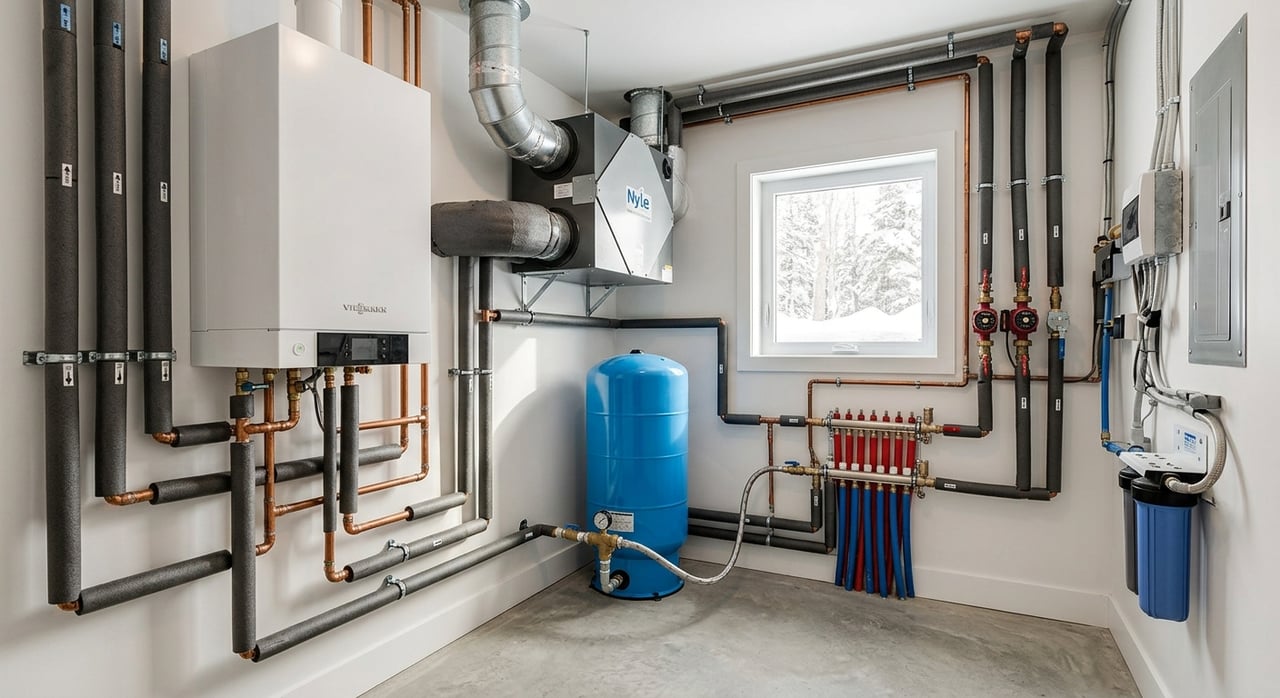
A four-season Muskoka cottage needs a heating plan that matches local conditions. The goal is not just warmth on a cool fall weekend. The goal is dependable performance through extended freezing weather.
NRCan says electric heat pumps are reversible heating and cooling systems that use less energy than traditional equipment, and cold-climate models can work well below freezing, down to -30°C, with backup heating for the coldest days. That makes them a serious option for many Ontario cottages.
Backup Heat Still Matters
Even with an efficient system, backup planning is wise. In Muskoka, extreme cold and power interruptions can affect how a property functions day to day.
Fuel-burning systems can still be part of a four-season setup, but they come with maintenance and safety responsibilities. Ontario advises annual inspection and cleaning of furnaces, chimneys, fireplaces, and wood stoves, and it says exterior vents should be kept clear of snow and debris.
Water Systems Need Freeze Protection
Heating is only one piece of the puzzle. A cottage can feel warm and still fail as a four-season property if the water system is vulnerable to freezing.
Many rural Muskoka properties rely on private wells or lake-based systems, and many also depend on septic infrastructure. Ontario notes that cottages in rural areas may have septic systems, that owners are responsible for operation and maintenance, and that permits are required for installation, alteration, extension, or repair of on-site sewage systems.
Know Your Water Source
The source of your water matters. Ontario says private well testing is free through Public Health Ontario, while surface water from lakes, ponds, rivers, and wetlands is highly vulnerable to contamination and should be considered unsuitable for drinking without treatment.
For buyers, that makes water-source due diligence especially important. For owners planning upgrades, it also affects what improvements may be needed to support reliable year-round use.
Renovations Can Trigger Permit Questions
Older cottages are not automatically required to meet every current code standard if no work is being done. But Ontario notes that when renovations, additions, or a change of use are planned, permit and code requirements can come into play.
That is an important distinction in Muskoka. A cottage that works for occasional summer use may require a more careful review if your plan is to modernize it for steady winter occupancy.
Septic and Plumbing Need a Winter Plan
Plumbing problems can quickly turn a winter cottage into a costly repair project. If the property will sit empty between visits, freezing risk becomes both a maintenance concern and an insurance concern.
According to the Insurance Bureau of Canada, standard home policies generally cover burst-pipe damage only when pipes are in the heated portion of the home and reasonable heat is maintained. If a home is vacant, owners should shut off the water and drain the lines.
This means four-season use is not only about having plumbing. It is about having a plumbing system, occupancy plan, and heating strategy that work together in a way your insurer will accept.
Winter Access Can Make or Break Usability
A beautiful cottage is not truly four-season if you cannot reliably get to it in January. In Muskoka, road maintenance depends heavily on whether your property sits on a township road, a district road, or a private route.
The Township of Muskoka Lakes says township roads are maintained to a snow-packed condition, while district roads are maintained to bare pavement. It also states that priority roads are typically cleared in 6 to 8 hours, with the full road system taking about 24 hours after snowfall.
Private Roads Need Private Solutions
Many seasonal and recreational properties are reached by private roads or long driveways. Muskoka Lakes notes that these routes may not be maintained by the township or district and may not be accessible in winter unless a private contractor handles snow clearing.
The township also advises that private routes should be wide enough for fire trucks and ambulances, salted or sanded, and kept clear of drifts. For buyers, this is a critical question to ask early. For sellers, winter access planning can be a meaningful part of how a property is positioned.
Safety Devices Are Not Optional
Winter occupancy brings added safety responsibilities. Ontario says all homes, cottages, cabins, and seasonal homes must have working smoke alarms on every storey and outside sleeping areas.
Ontario’s carbon monoxide alarm rules also apply to cottages with fuel-burning appliances, fireplaces, or attached garages. The province further advises that portable fuel-burning generators should be used outdoors only and away from openings.
These are basic but essential parts of four-season readiness. A cottage that is warm and accessible still needs the right life-safety systems in place.
Insurance Should Be Reviewed Early
Insurance is one of the most overlooked parts of converting or buying a four-season cottage. Yet it can shape what is practical, what is covered, and what costs you may face over time.
The Insurance Bureau of Canada says insurers consider factors such as replacement cost, construction type, electrical and plumbing updates, security measures, and distance from the nearest fire hydrant and responding fire department when setting rates. It also notes that overland flood and sewer backup coverage are often optional rather than automatic.
Rental Use Can Change the Conversation
If you plan to rent the cottage, the insurance discussion should happen before you start taking bookings. IBC notes that standard and seasonal policies may restrict or exclude coverage if the property is rented to others.
That matters for many Muskoka buyers who are considering occasional rental income. A property can look like a strong four-season opportunity on paper, but insurance terms may change once the use changes.
Power Outages Deserve a Backup Plan
In cottage country, a power outage can affect much more than lighting. Ontario says households should be prepared for outages at any time of year.
For a Muskoka cottage, that can mean interrupted heat, water, communications, and pump systems. If the property depends on electricity for key winter functions, backup planning should be part of your four-season checklist.
A Simple Four-Season Checklist
If you are assessing a Muskoka cottage, focus on the property as a complete system. Here are the core areas to review:
- Envelope: insulation, air sealing, windows, doors, roof, attic, and foundation
- Heating: primary heat source, backup heat, and maintenance history
- Water: well or treated surface-water setup, freeze protection, and testing
- Septic: condition, maintenance, and whether planned changes may require permits
- Access: township, district, or private-road maintenance and driveway clearing
- Safety: smoke alarms, CO alarms, and safe generator use
- Insurance: occupancy rules, burst-pipe conditions, optional coverages, and rental restrictions
- Power resilience: outage preparedness for heating, water, and communications
Why This Matters for Buyers and Sellers
For buyers, a true four-season cottage can offer broader usability and fewer surprises after closing. It can also help you judge whether a property is ready now or whether it needs a staged upgrade plan.
For sellers, four-season readiness can strengthen buyer confidence when the property’s systems, access, and winter logistics are clearly understood. In a market like Muskoka, where waterfront and recreational properties often come with unique operational details, clarity builds trust.
The main takeaway is simple. In Muskoka, making a cottage truly four season is rarely one renovation. It is the result of envelope performance, heating, water, septic, access, safety, power planning, and insurance all working together.
If you are thinking about buying or selling a Muskoka cottage and want practical guidance around year-round usability, waterfront logistics, and property positioning, connect with Bryan Coxworth for a thoughtful, local conversation.
FAQs
What makes a Muskoka cottage truly four season?
- A Muskoka cottage is truly four season when it can be occupied, serviced, and insured through winter with reliable heating, freeze-protected water systems, appropriate septic infrastructure, safe access, and the right safety devices.
How cold and snowy is winter in Muskoka?
- Environment and Climate Change Canada climate normals for Huntsville show average daily temperatures of -10.2°C in January and -8.6°C in February, with 285.6 cm of annual snowfall and 54.4 snowfall days.
Can a heat pump work in a Muskoka cottage during winter?
- Yes, NRCan says cold-climate electric heat pumps can work well below freezing, down to -30°C, with backup heating used for the coldest days.
Do Muskoka cottages with septic systems need special attention for year-round use?
- Yes, Ontario says many rural cottages rely on septic systems, owners are responsible for maintenance, and permits are required for installation, alteration, extension, or repair.
Is lake water safe for drinking at a Muskoka cottage?
- Ontario says surface water from lakes, ponds, rivers, and wetlands is highly vulnerable to contamination and should be considered unsuitable for drinking without treatment.
Are private roads in Muskoka maintained in winter?
- Not always. Muskoka Lakes says many private roads and long driveways are not maintained by the township or district, so winter access may depend on a private contractor.
What insurance issues matter for a four-season Muskoka cottage?
- Insurance can depend on factors like construction type, updates to plumbing and electrical, distance to fire response, vacancy, burst-pipe prevention, and whether the cottage is rented to others.
Do Muskoka cottages need carbon monoxide alarms?
- Yes, Ontario says CO alarm rules apply to cottages with fuel-burning appliances, fireplaces, or attached garages, and smoke alarms are required on every storey and outside sleeping areas.